ElpoNox ND is an electrochemical process for removing PVD nitride coatings from
stainless steel holders and covers. It is particularly suitable for titanium nitride and boride coatings, but also reliably removes coatings based on chromium (CrN, AlCrN) and silicon (SiN, AlSiN, TiSiN, AlTiSiN).
.png)
The process is used for stripping austenitic stainless steel. It removes nitride layers evenly and leaves a satin-matt finish, with minimal etching of the base material. The electrolyte used is supplied ready for use. The process takes place at 20–40 °C, 3–7 A/dm² and just 2–5 V. It is characterised by its short treatment time of just 3–30 minutes, depending on the coating thickness and type. For operation, an acid-resistant plastic tank with extraction, a rectifier, bath circulation and filtration, as well as subsequent ultrasonic cleaning, is recommended.
This process is particularly suitable for the regular maintenance and reconditioning of PVD holders, racks and screens made of stainless steel. It is possible to treat a multilayer system consisting of compatible coating types. It is particularly well suited to replacing the time-consuming and costly process of sandblasting.
- Rapid and uniform removal of PVD nitride coatings
- Shorter processing times compared with mechanical blasting methods
- Gentle treatment of complex component geometries
- High process reliability and reproducible results
- A satin-matt finish after treatment - Reduced labour requirements and lower operating costs
Find the right process for your application – customised
to your industry, material and production environment.
.avif)
Processes for implants and instruments: metallically pure, passive, burr-free, and biocompatible

.avif)
Reliable finishing solutions for high-volume metal component production

Electrochemical and chemical processes for polishing, deburring and passivating of complex components
.avif)
Process solutions for functional and decorative components in locking technology.
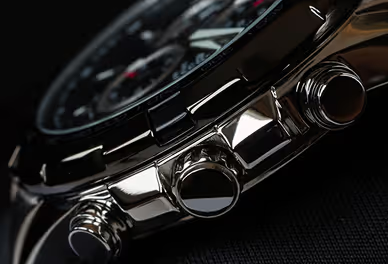
High-precision surface finishing for functional and aesthetic requirements
.avif)
Finishing Process for components in spinning and weaving technology for thread-safe smoothness